Welcome to CLPHA's Press Room
CLPHA experts welcome interview requests from print, radio, television, and online reporters and are happy to provide their insights on issues of public housing and related legislation and policy.
For media inquiries, please contact:
David Greer
Director of Communications
(202) 550-1381 or [email protected].
*Please let us know if you are working on deadline.
To view all of CLPHA's press releases, click here.
To view all of CLPHA's press statements, click here.
You can subscribe here to our biweekly newsletter, events invite list, and topic specific newsletters. You can also follow us on Twitter at @CLPHA. Or, send us an email with your interests and we would be happy to add you to our press lists.
Thanks again for your interest in CLPHA!
|
(202) 550-1381
For Immediate Release
March 4, 2021 |
|
|
(Washington, D.C.) March 4, 2021 – Sunia Zaterman, executive director of the Council of Large Public Housing Authorities, released the following statement urging the swift passage of the American Rescue Plan Act in the U.S. Senate: “The Council of Large Public Housing Authorities calls for the Senate to pass the American Rescue Plan Act of 2021, which includes desperately needed $30 billion in emergency rental assistance, $5 billion in single-use vouchers, and a significant extension of the eviction moratorium. “This legislation is critical to addressing the rental crisis facing the nation. The situation has only grown more dire since the Biden Administration announced the American Rescue Plan in mid-January. Renters have continued to accrue past-due rent at an alarmingly high rate. While the eviction moratorium has provided important protections for renters financially impacted by the pandemic, the moratorium has meant that millions of renters have accumulated significant arrears. Economists estimate that unpaid rent at the end of January 2021 totals $52 billion, which amounts to $5,600 for the average renter. “The $5 billion in emergency housing vouchers will help transition persons-at-risk and homeless persons to stable housing. Emergency rental assistance is not only vital to renters, but its impact on the economy and public health is far-reaching. The Senate must act swiftly to provide emergency rental assistance and prevent a wave of evictions and housing instability that will tragically disrupt the lives of millions of Americans.” |
||
|
|
||
|
|
||
|
About the Council of Large Public Housing Authorities
About CLPHA’s Housing Is Initiative |
||
|
(202) 550-1381
For Immediate Release
February 27, 2021 |
|
|
(Washington, D.C.) February 27, 2021 – Sunia Zaterman, executive director of the Council of Large Public Housing Authorities, released the following statement upon tonight’s passage of the American Rescue Plan Act in the U.S. House of Representatives:
“The Council of Large Public Housing Authorities applauds the House of Representatives' bipartisan passage of the American Rescue Plan Act, which includes $35 billion in emergency rental and utility assistance and a significant extension of the eviction moratorium.
“This legislation is critical to address the rental crisis facing the nation. The situation has only grown worse since the Biden Administration announced the American Rescue Plan in mid-January. Renters have continued to accrue past-due rent at an alarmingly high rate. While the eviction moratorium has provided important protections for renters financially impacted by the pandemic, the moratorium has meant that millions of renters have accumulated significant arrears. Economists estimate that unpaid rent at the end of January 2021 totals $52 billion, which amounts to $5,600 for the average renter. With the March 31 moratorium on evictions rapidly approaching, additional rent assistance is urgently needed to help renters stay in their homes by addressing back rent. The Senate must act swiftly to provide emergency rental assistance and prevent a wave of evictions that will tragically disrupt the lives of millions of Americans.”
|
||
|
|
||
|
|
||
|
About the Council of Large Public Housing Authorities
About CLPHA’s Housing Is Initiative |
||
|
(202) 550-1381
For Immediate Release
January 28, 2021 |
|
|
(Washington, D.C.) January 28, 2021 – Sunia Zaterman, executive director of the Council of Large Public Housing Authorities, released the following statement upon the conclusion of the U.S. Senate Committee on Banking, Housing & Urban Affairs’ nomination hearing for The Honorable Marcia L. Fudge, of Ohio, to be Secretary of the U.S. Department of Housing and Urban Development: “The Council of Large Public Housing Authorities applauds HUD Secretary-designate Marcia Fudge’s forceful call for expanding emergency rental assistance at her Senate nomination hearing today for individuals who are facing housing instability due to lost income or are experiencing unemployment because of COVID-19, many of whom are people of color. She understands that the $25 billion allocated to emergency rental assistance in the most recent stimulus was not enough and only a down payment.
“Right now, in back rent alone, 10 million low-income renters have accrued an average of $5,600 in rental arrears, which totals $56.3 billion. The current stimulus package will help approximately 3.5 million renters pay back rent by February. The remaining 7 million renters who are unable to pay back rent will face eviction, compounding the strain on our nation’s economy and compromising our nation’s moral responsibility to address racial inequities among our most vulnerable individuals.
CLPHA calls for Congress to immediately pass President Biden’s American Rescue Plan which contains $50 billion in emergency rental assistance, and for the Senate to swiftly confirm Secretary-designate Fudge so that she can begin her imperative work.”
About the Council of Large Public Housing Authorities
About CLPHA’s Housing Is Initiative |
The Housing Opportunities Commission of Montgomery County and partners cut the ribbon on The Lindley, a 200-unit high-rise in Chevy Chase, MD. The opening of The Lindley constitutes a net increase of 22 units of affordable housing in the neighborhood. You can watch a time-lapse video of The Lindley’s construction here.
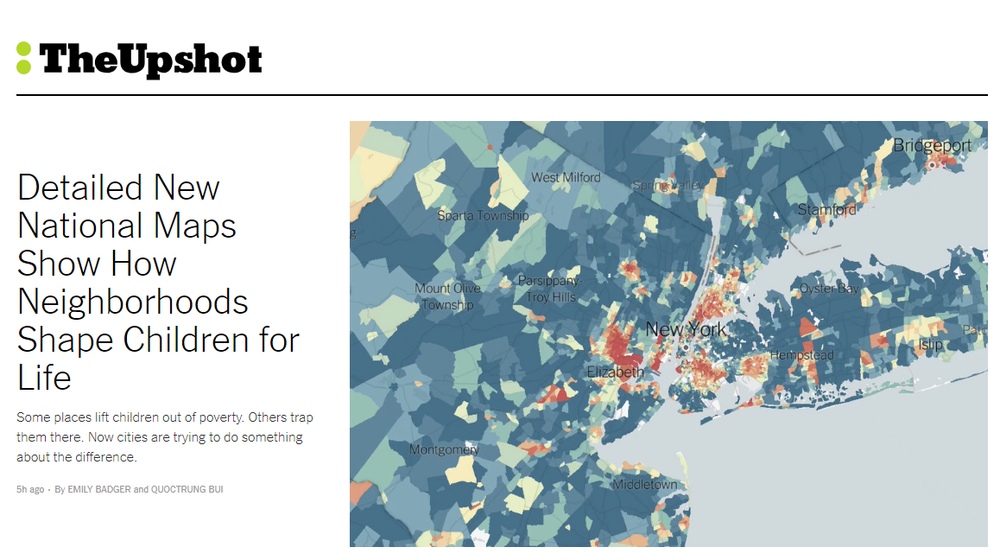
The long-awaited Opportunity Atlas, published today by the Census Bureau in collaboration with researchers at Harvard and Brown, got top billing on today’s homepage of the New York Times’ data-driven digital property The Upshot. “Detailed New National Maps Show How Neighborhoods Shape Children for Life,” includes the new interactive mapping tool, some of the project’s main findings, and examples of the mobility work that public housing authorities are currently doing, and plan to do, with the data. In addition to quoting Raj Chetty, one of the project’s researchers, authors Emily Badger and Quoctrung Bui feature quotes and examples from CLPHA members Greg Russ, Executive Director of the Minneapolis Public Housing Authority, Andrew Lofton, Executive Director of the Seattle Housing Authority and Andria Lazaga also of SHA who each discussed how PHAs are using the data as part of their Creating Moves to Opportunity (CMTO) work.
Additional news coverage of the Opportunity Atlas includes an NPR segment during today’s Morning Edition broadcast that features interviews with Chetty and local officials in Charlotte, NC, who intend to use the data to shape future policy decisions.
Read the article and use the interactive maps on the NYT website and listen to the Morning Edition story on NPR’s site.
On August 9, HUD sent the 2017 Worst Case Housing Needs Report to Congress, providing national data and analysis of critical problems facing low-income renting families throughout the nation. The report, which is HUD's 16th in a longstanding series, chronicles an increase in severe housing problems, with the number of households considered to have worst case housing needs jumping from 7.72 million in 2013 to 8.3 million in 2015. HUD also reports that, since 2007, the U.S. has seen a 41 percent increase in severe housing problems, and a 66 percent increase since 2001. The Worst Case Housing Needs Report defines households with worst case needs as very low-income renters who do not receive government housing assistance and who paid more than one-half of their income for rent, lived in severely inadequate conditions, or both.
Using data from the 2015 American Housing Survey, HUD found that the economic benefits of an improving national economy are not reaching the lowest-income renter households and that overall severe housing problems are on the rise. The report acknowledges a large shift from homeownership to renting as playing a major role in the increase of worst case housing needs, noting that, "modest gains in household incomes were met with rising rents, shrinking the supply of affordable rental housing stock in an increasingly competitive market."
You can view the 2017 Worst Case Housing Needs Report by clicking here.
On August 1, the Senate Finance Committee held a hearing, “America’s Affordable Housing Crisis: Challenges and Solutions.” The hearing focused primarily on the challenge of increasing the supply of affordable housing and strategies to address the significant housing cost burdens faced by many Americans. Senator Hatch opened the hearing, stating that the affordable housing crisis, “is a problem that should be ready for a bipartisan solution.” To view our write-up of the hearing, click here.
To help tackle the affordable housing issues discussed in the hearing, Senators Orrin G. Hatch (R-UT) and Maria Cantwell (D-WA) have introduced legislation, S. 548, the Affordable Housing Credit Improvement Act. The bill would increase Low-Income Housing Tax Credit (LIHTC) credit authority by 50 percent, as well as enact roughly two dozen changes to strengthen the program by streamlining program rules, improving flexibility, and enabling the program to serve a wider array of local needs.
During the hearing, Committee Members expressed their support for the Cantwell-Hatch bill and there was broad bipartisan consensus that the LIHTC program is a vital tool for increasing the production of affordable housing and providing low-income households, safe, quality, affordable homes. However, there were also concerns raised regarding oversight and compliance of the program. Daniel Garcia-Diaz, director of financial markets and community investment at the U.S. Government Accountability Office (GAO), presented testimony that IRS oversight of LIHTC is minimal and that there are no robust controls in place to ensure reasonableness of costs or compliance with program requirements. According to Mr. Garcia-Diaz, the GAO recommends that HUD, as an agency with a housing mission, play a greater role in the oversight of the program.
In our Statement for the Record, CLPHA applauded the leadership the Senate Finance Committee has shown in support of LIHTC to date and encouraged the Committee to support S. 548. The bill is especially beneficial to the public housing program, which has experienced decades of underfunding and federal disinvestment. We noted that LIHTC has proven to be an extremely important preservation tool for public housing, and PHAs have a long history of leveraging private equity through LIHTCs to fill the funding gap created by decreased federal appropriations. Without the LIHTC program, preservation of their public housing stock would not be possible.
CLPHA also acknowledged that competition for more valuable 9% LIHTCs is fierce in many states and that there have been concerns within the affordable housing community about increased demand from the public housing portfolio. Increasing the allocation authority by 50 percent would support the preservation and construction of up to 400,000 additional affordable apartments over a ten-year period, including the renovation of vital public housing units that are currently at-risk. Additionally, the legislation allows for an increased basis boost for projects serving extremely low-income households. This would be particularly beneficial to housing authorities, as 75 percent of public housing residents are extremely-low income.
CLPHA has been strongly supportive of the legislation. In addition to the Statement of Record above, CLPHA has also engaged in this work as a member of the A.C.T.I.O.N. Campaign Steering Committee (A Call to Invest in Our Neighborhoods). The A.C.T.I.O.N. Campaign has taken a lead role in promoting the expansion of LIHTC, including support of S.548. Last month the Campaign submitted a letter to Senator Hatch in response to his request for comments on tax reform, urging Congress to expand and strengthen the housing credit. Along with other Steering Committee members, CLPHA endorsed and signed the letter.
As Congress takes on tax reform in the upcoming months, we will continue to support this important legislation that would provide needed resources to public housing. CLPHA members should support the Affordable Housing Credit Improvement Act by contacting their senators during recess to urge them to support the bill.
Two-Generation Economic Act reflects the cross-sector collaboration that CLPHA’s Housing IsInitiative promotes.
Senators Susan Collins (R-ME) and Martin Heinrich (D-NM) recently reintroduced bipartisan legislation in the Senate, calling for the development of support programs that improve family economic security by breaking the cycle of multigenerational poverty through a comprehensive strategy that addresses the needs of parents and children. The Two-Generation Economic Act of 2017, or S. 435, seeks to align and link existing service systems and funding streams that currently support parents and children separately. Heinrich and Collins believe that aligning the support systems to help parents and children together will increase the whole family’s chances for success in life. The bill also establishes the Interagency Council on Multigenerational Poverty to provide guidance on two-generation programs; establish a system of coordination among agencies and organizations; identify best practices; and identify gaps, research needs, and program deficiencies.
The Two-Generation Economic Act of 2017 is a significant step in the fight against poverty. It would be the first piece of legislation to incorporate a two-generation approach aimed at increasing economic security, educational success, social capital, and health and well-being for parents and children together. In seeking to better align service systems and funding streams, the bill would give states, local governments, and tribes more flexibility to develop programs that meet their specific needs. The approach outlined in S. 435 would greatly improve the effectiveness of service delivery, and it highlights the same principles and goals around which CLPHA’s Housing Is initiative was founded, to better intersect housing and other sectors in order to improve life outcomes. CLPHA has long promoted two-generation initiatives as a best practice and has been a leader in fostering partnerships to encourage innovative solutions to address generational poverty.
The Interagency Council on Multigenerational Poverty will create a national focus on multigenerational poverty by facilitating coordinated efforts across multiple agencies and departments. This interagency collaboration will align and link fragmented systems and funding streams, resulting in holistic approaches that simultaneously address the needs of children and their parents or guardians.
A collaboration that has been in the works for several years, the Two-Generation Economic Empowerment Act includes a balance of input and interests from local service providers, families, administrators, and other stakeholders. Heinrich and Collins hope that this innovative approach will help collectively ensure that people will have an opportunity to use already existing federal resources or attract private investment to implement the two-generation approach in their community, regardless of one’s zip code.
When Senator Collins first introduced the bill, she told the story of a five-year-old girl named Arianna who was homeless, living in a tent with her family outside of Portland, ME. A state social worker worked with the Maine Homeless Veterans Alliance to provide support services to the girl and her family, who are now living in an apartment near where Arianna is attending school. This is a small-scale example of the holistic approach that Collins and Heinrich wish to achieve with their legislation.
“Just as a child’s ZIP code should not determine his or her future success, neither should bureaucratic inflexibility make it so difficult for families to get the help they need to escape intergenerational poverty,” Senator Collins said.
You can learn more about the Two-Generation Economic Act of 2017 by reading this fact sheet that explains the principles of the bill or view a copy of the bill by clicking here.
From the Housing Authority of the City of Pittsburgh's press release:
This school year marks a major milestone for the Clean Slate E3 Scholarship Program and our valued partners at NEED. Scholarship investments in HACP youth have now exceeded $1 million since the program’s 2009 inception.
Clean Slate and NEED have awarded funds to 24 new Clean Slate E3 Scholarship recipients (which equals up to $480,000 over four years), and 14 returning students for the 2026-27 school year. This school year’s total contributions for the 38 scholarships is $187,500.
Clean Slate awards up to $4,000 and NEED awards up to $1,000 a year for four years to each recipient, with total awards of up to $20,000 to recipients who are chosen by representatives at NEED.
Monies from the scholarship fund come from HACP employee donations and other contributions; it is not funded with federal dollars.
“The HACP is committed to investing in its youth,” HACP Executive Director Caster D. Binion said. “This commitment is evident by the ongoing efforts of the Clean Slate E3 Scholarship Program, and our own employee donations and other contributions that have helped us to surpass such a monumental milestone with more than $1 million in funding since 2009. We are proud of our youth who are putting in this hard work to secure bright futures, and are happy to help them by being a place to live and a path to launch.”
HACP residents — in both Low-Income Public Housing and the Housing Choice Voucher Program — who are either graduating high school or continuing their college education with a cumulative GPA of 2.5 or higher — are eligible to apply.
“We’ve reached two milestones this year. This is the largest group of scholarship recipients that we’ve had since the inception of the scholarship program in 2009 and we’ve surpassed the $1 million dollar mark in scholarships funded to HACP youth!” Susan Lofaro, Clean Slate E3 program manager, said. “I’m excited by the momentum that this Clean Slate E3 program has made in the past year and we’ll continue our outreach efforts.”
She added Clean Slate wants families to know scholarships are given to students attending traditional four-year institutions, as well as those wishing to attend trade or technical schools.
“We continue to be grateful for our partnership with NEED to ensure a seamless process when working with both the students and schools,” she said.
“Receiving this 20,000 scholarship would help me pay for my education and reduce the stress of paying for college,” Housing Choice Voucher resident Heaven-Marie Green said. “It would allow me to focus more on my classes, learning and reaching my goals instead of worrying about money. This scholarship would also help me buy books, supplies and cover other school-related expenses, making it easier for me to succeed.” Heaven-Marie is majoring in education at Duquesne University.
“This scholarship would help with books and any supplies needed for my education, which would greatly ease my family’s financial burden, allowing them to focus on my siblings while I continue studying,” Samara Freeman. Samara, a Low-Income Public Housing resident, is majoring in psychology at Cheyney University.
From The Journal Record:
Oklahoma City is making progress on six major developments that will add hundreds of affordable housing units across the area.
Funded partly through the MAPS 4 initiative, the plan combines permanent supportive housing, public housing remodels, and workforce accommodations for families. Assistant Executive Director Greg Shinn updated the City Council on Tuesday.
“These projects are intended to intentionally target those parts of the housing need for different sectors of our population,” Shinn said. “Keep homelessness in check, try to reduce homelessness, try to have family workforce housing.”
Oklahoma City faces an estimated shortfall of 45,000 affordable housing units, according to Oklahoma City’s Key to Home Strategy Implementation Manager Jamie Caves. To tackle the deficit, the MAPS 4 Homelessness Program is investing $55.7 million in taxpayer funds. Officials expect to leverage more than $400 million in additional housing funds over the next decade.
From Lincoln Avenue Communities' press release:
Lincoln Avenue Communities (LAC), a mission-driven acquirer and developer of affordable housing, and the Housing Authority of Salt Lake City (HASLC), the largest affordable housing provider in Salt Lake Valley, broke ground on the future site of Erma’s at Fairmont, a 110-unit affordable senior housing development in Salt Lake City, during a ceremony with community leaders and public partners.
“LAC is proud to break ground on Erma’s at Fairmont, which will bring high-quality, affordable housing to seniors in the heart of Salt Lake City’s Sugar House neighborhood,” said Rusty Snow, LAC Vice President and Regional Project Partner. “This project reflects our commitment to providing high-quality in communities most impacted by the affordability crisis.”
Erma’s at Fairmont will feature a mix of one and two- bedroom apartments. The community will lease its units to seniors earning between 20% to 80% of the area median income (AMI). The development will set aside five units for residents with a history of homelessness, six units for residents with disabilities and eight units for residents with mobility impairments.
The apartments, uniquely located directly on Fairmont Park in the Sugarhouse neighborhood, will offer a picturesque view and be conveniently situated near medical facilities, shopping centers, entertainment venues, recreational areas, transportation hubs, and outdoor amenities. Communal amenities include a fitness center, community room, bicycle park with permanently installed racks, elevator service and structured parking. A second phase of housing is planned on the southern portion of the site, which will add a second tower with additional affordable units.
“This is a very unusual new project,” said Daniel Nackerman, Executive Director of the Housing Authority of Salt Lake City and President of HAME, the non-profit developer. “It is located on some of the most expensive land in Utah yet it is 100% affordable and is in the epicenter of surrounding elements for the quality of life of our seniors. It also helps with our mayor’s goal of lessening gentrification in a very booming neighborhood – where seniors can now stay close to all…”
Construction is expected to be completed by the end of 2027.
From the Housing Authority of Baltimore City's press release:
In recognition of National Homeownership Month, the Housing Authority of Baltimore City (HABC) and the Baltimore City Department of Housing and Community Development (DHCD) today highlighted their continued partnership to help Baltimore residents achieve the dream of homeownership.
Through HABC’s Homeownership Program and Services and DHCD’s First-Time Homebuyer Incentive Program, the two agencies combine resources to provide residents with the support needed to purchase homes. Through HABC’s program, 120 Baltimore residents became homeowners over the last eight years, generating nearly $25 million in property sales — an average of approximately $200,000 per home — supported by more than $4 million in down payment and closing cost assistance.
HABC currently has 26 families with mortgages approved under contract or searching for a home. The agency plans to help at least 50 families purchase a home in 2026.
“We create opportunities to self-sufficiency and invest in programs that encourage economic mobility,” said Janet Abrahams, HABC’s President and CEO. “Homeownership can serve as a pathway to increased financial independence by helping families establish credit, build savings, and invest in their communities.”
Over the past fiscal year, DHCD invested $2.7 million and assisted more than 240 families on their path to homeownership through its various programs.
“We are expanding opportunities for Baltimore residents to achieve the dream of owning a home by supporting not only first-time homebuyers, but also City employees, and workforce housing initiatives,” said Acting Housing Commissioner Tim Keane. “Our partnership with HABC has been especially impactful, helping Housing Choice Voucher participants and Public Housing Residents move from renting to owning and build generational wealth through homeownership in the private market.”
Together, HABC and DHCD administer a range of programs that support residents at every stage of the homebuying journey, including:
- Homebuyer education programs that prepare residents for the homeownership process
- One-on-one homeownership counseling and financial readiness support
- Down payment and closing cost assistance programs for eligible homebuyers
- Housing Choice Voucher Homeownership Program supporting rental-to-ownership transitions
- City-supported housing programs designed to expand equitable access to ownership
Resident Jenise Coney recently completed HABC’s Homeownership Program and will close on her first home at the end of June.
“I always wanted to have my own home and to be able to say that it is mine,” said Coney. “HABC’s Homeownership Program is excellent and allows people to move forward, buy a house, and become their own landlords. It’s a blessing to be able to leave a legacy to your kids, grandkids, or a family member.”
Along with the programming the agencies provide year-round, the Housing Authority of Baltimore City along with partners will host Keys to the City – Homeownership and Development Showcase on June 27, from 10 a.m. to 2 p.m. at Pleasant View Gardens, 201 Aisquith Street. The event will serve as a central access point for residents to engage directly with housing counselors, lenders, developers and program representatives offering guidance on homebuying opportunities and financial assistance.
Residents can sign up for the June 27 Homeownership program at [email protected] or call 410-396-4171.
Throughout National Homeownership Month, HABC is also highlighting Baltimore residents like Conyer who have successfully purchased homes through City-supported programs, showcasing real stories that demonstrate what is possible when residents are connected to the right resources.
“Homebuyer programs provide residents with more than financial assistance—they offer education, guidance, and pathways to wealth-building,” said Abrahams. “These programs help public housing residents turn the dream of owning a home into a sustainable reality.”
From Atlanta Housing:
Some honors recognize achievement. Others recognize a legacy of service.
Congratulations to our CEO Terri M. Lee on being named a 2026 Diamond Award Laureate by The Not Alone Foundation during The Academy of the Diamond Awards.
Terri received The Crown Jewel: Presidential Diamond Award for Transformational Housing Leadership, Community Development, Economic Empowerment, Humanitarian Service & Civic Impact, recognizing her visionary leadership and unwavering commitment to expanding opportunity, strengthening communities, and improving lives through affordable housing.
She was also honored with the inaugural Xernona Clayton Humanitarian Honor, established to preserve the extraordinary legacy of civil rights icon Xernona Clayton and to recognize leaders whose courage, compassion, and servant leadership have made a lasting impact on the communities they serve.
Reserved for extraordinary women and men whose lives have become instruments of hope, justice, compassion, and transformational service, The Xernona Clayton Humanitarian Honor stands among the Academy's highest distinctions. Established in perpetuity to preserve the enduring legacy of civil rights icon, humanitarian, and global bridge-builder Ms. Xernona Clayton, this honor recognizes individuals whose leadership transcends profession to restore dignity, expand opportunity, uplift humanity, and leave an indelible imprint upon the world. It celebrates those who do not simply witness history—they change its course through courage, conviction, and an unwavering commitment to the human spirit.
Like a diamond, transformational leadership is forged through resilience, vision, integrity, and service. Through her leadership at Atlanta Housing, Terri continues to help build stronger communities, expand economic opportunity, and create pathways to a brighter future for thousands of families across metro Atlanta.