CLPHA supports the nation’s largest and most innovative housing authorities by advocating for the resources and policies they need to solve local housing challenges and create communities of opportunity. We frequently champion our members' issues, needs, and successes on the Hill, at HUD, and in the media. In these arenas CLPHA also advocates for legislation and policies that help our members, and the public and affordable housing industry as a whole, strengthen neighborhoods and improve lives.
Click below for links to congressional testimonies, statements for the record, action alerts, comments to HUD and other federal agencies, and the latest information about CLPHA's multi-pronged housing advocacy.
CLPHA joined with industry colleagues NAHRO, PHADA, and the MTW Collaborative today to send a statement to House and Senate Committee leadership urging their support for the ACC contract language included in the Senate’s FY20 THUD Appropriations bill.
Because HUD’s proposed revisions to the ACC contain some provisions that are problematic and were not resolved during a joint industry meeting with PIH Assistant Secretary Hunter Kurtz and HUD staff, the four groups remain concerned that without the Senate appropriations language, HUD’s new ACC will not meet the standards set in the Housing Act of 1937 and the current ACC.
ACTION:
As members of the House and Senate Appropriations committee negotiate the final THUD appropriations bill, it is imperative that CLPHA members contact their Senators and Representatives and urge them to support the Senate’s language on the ACC.
If your Senators or Representatives are appropriators (see the list below) it is critical that CLPHA members contact them this week and ask them to support the Senate’s THUD Appropriations language on the ACC.
If you have questions about this action alert or the current status of the ACC, please contact CLPHA’s Legislative Director Gerard Holder at [email protected].
Members of the Appropriations Committees
HOUSE APPROPRIATIONS COMMITTEE
|
MAJORITY |
State |
Dist. |
MINORITY |
State |
Dist. |
|
|
Nita M. Lowey, Chairwoman |
NY |
17 |
Kay Granger, Ranking Member |
TX |
12 |
|
|
Marcy Kaptur |
OH |
9 |
Harold Rogers |
KY |
5 |
|
|
Peter J. Visclosky |
IN |
1 |
Robert Aderholt |
AL |
4 |
|
|
Jose E. Serrano |
NY |
15 |
Michael K. Simpson |
ID |
2 |
|
|
Rosa L. DeLauro |
CT |
3 |
John Carter |
TX |
31 |
|
|
David E. Price, THUD Chair |
NC |
4 |
Ken Calvert |
CA |
42 |
|
|
Lucille Roybal-Allard |
CA |
40 |
Tom Cole |
OK |
4 |
|
|
Sanford D. Bishop, Jr. |
GA |
2 |
Mario Diaz-Balart, THUD Ranking |
FL |
25 |
|
|
Barbara Lee |
CA |
13 |
Tom Graves |
GA |
14 |
|
|
Betty McCollum |
MN |
4 |
Steve Womack |
AR |
3 |
|
|
Tim Ryan |
OH |
13 |
Jeff Fortenberry |
NE |
1 |
|
|
C.A. Dutch Ruppersberger |
MD |
2 |
Charles Fleischmann |
TN |
3 |
|
|
Debbie Wasserman Schultz |
FL |
23 |
Jaime Herrera Beutler |
WA |
3 |
|
|
Henry Cuellar |
TX |
28 |
David Joyce |
OH |
14 |
|
|
Chellie Pingree |
ME |
1 |
Andy Harris |
MD |
1 |
|
|
Mike Quigley, THUD Vice Chair |
IL |
5 |
Martha Roby |
AL |
2 |
|
|
Derek Kilmer |
WA |
6 |
Mark Amodei |
NV |
2 |
|
|
Matt Cartwright |
PA |
8 |
Chris Stewart |
UT |
2 |
|
|
Grace Meng |
NY |
6 |
Steven Palazzo |
MS |
4 |
|
|
Mark Pocan |
WI |
2 |
Dan Newhouse |
WA |
4 |
|
|
Katherine Clark |
MA |
5 |
John Moolenaar |
MI |
4 |
|
|
Pete Aguilar |
CA |
31 |
John Rutherford |
FL |
4 |
|
|
Lois Frankel |
FL |
21 |
Will Hurd |
TX |
23 |
|
|
Cheri Bustos |
IL |
17 |
||||
|
Bonnie Watson Coleman |
NJ |
12 |
||||
|
Brenda Lawrence |
MI |
14 |
||||
|
Norma Torres |
CA |
35 |
||||
|
Charlie Crist |
FL |
13 |
||||
|
Ann Kirkpatrick |
AZ |
2 |
||||
|
Ed Case |
HI |
1 |
SENATE APPROPRIATIONS COMMITTEE
|
MAJORITY |
State |
MINORITY |
State |
|
|
Richard C. Shelby |
AL |
Patrick J. Leahy, Vice Chair |
VT |
|
|
Mitch McConnell |
KY |
Patty Murray |
WA |
|
|
Lamar Alexander |
TN |
Dianne Feinstein |
CA |
|
|
Susan Collins, THUD Chair |
ME |
Richard J. Durbin |
IL |
|
|
Lisa Murkowski |
AK |
Jack Reed, Thud Ranking |
RI |
|
|
Lindsay Graham |
SC |
Jon Tester |
MT |
|
|
Roy Blunt |
MO |
Tom Udall |
NM |
|
|
Jerry Moran |
KS |
Jeanne Shaheen |
NH |
|
|
John Hoeven |
ND |
Jeff Merkley |
OR |
|
|
John Boozman |
AR |
Chris Coons |
DE |
|
|
Shelley Moore Capito |
WV |
Brian Schatz |
HI |
|
|
John Kennedy |
LA |
Tammy Baldwin |
WI |
|
|
Cindy Hyde-Smith |
MI |
Christopher Murphy |
CT |
|
|
Steve Daines |
MT |
Joe Manchin |
WV |
|
|
Marco Rubio |
FL |
Chris Van Hollen |
MD |
|
|
James Lankford |
OK |
|||
The House of Representatives may vote as soon as next week on bipartisan legislation to permanently authorize HUD’s Community Development Block Grant–Disaster Recovery (CDBG-DR) program.
The bill – the “Reforming Disaster Recovery Act” – includes key reforms to the CDBG-DR program to help ensure that federal disaster recovery efforts reach all impacted households.
The bill was introduced by Representatives Al Green (D-TX) and Ann Wagner (R-MO) and passed out of the House Financial Services Committee this summer with unanimous support.
CDBG-DR provides states and communities with flexible, long-term recovery resources needed to rebuild affordable housing and infrastructure after a disaster. By formally authorizing the program, the bill would help ensure the process is administered consistently and that dollars can flow more quickly to communities in need. In addition, the bill includes important measures to ensure that scarce resources are targeted to families and communities with the greatest needs.
For more information on these important measures please see the fact sheet from our colleagues at the Disaster Housing Recovery Coalition.
As a member of the National Low Income Housing Coalition, CLPHA is supporting NLIHC's Our Homes, Our Votes campaign to ensure the issue of housing affordability in America is front and center during the the October 15 presidential debate.
The campaign is urging CNN, The New York Times, and the moderators of the next debate—Anderson Cooper, Erin Burnett, and Marc Lacey—to ask the candidates about the most important issue impacting our economic wellbeing, health, educational success, and so much more – affordable homes.
Presidential candidates have released significant plans and proposals to address the country’s housing affordability crisis and are talking about these plans on the campaign trail like never before. Help us build the momentum and elevate housing affordability as a priority issue!
Sign Your PHA on the Letter Today

|
The City of New York is spearheading a sign-on letter for Mayors and municipal leaders across the country to request more funding for public housing from Congress. The letter thanks Congress for passing a bipartisan budget agreement which increases spending levels for domestic programs. With this increase, Mayor Bill de Blasio is asking Mayors and municipal leaders to call on Congress to support the effort to increase public housing funding. The letter calls on Congress to increase the Public Housing Capital Fund to $5 billion and to fund the Public Housing Operating Fund at 100 percent proration. "Increasing funding for these two essential programs will help ensure that nearly one million families will continue to have access to safe, decent, and affordable housing. It will also provide PHAs across the country with much-needed resources to operate and maintain the public housing stock in our communities." ACTION: CLPHA encourages member PHAs to contact your Mayors and municipal leaders and ask them to
|
Widely supported bipartisan, bicameral legislation to expand and strengthen the Low-Income Housing Tax Credit (LIHTC) was reintroduced in the Senate and House today by Senators Maria Cantwell (D-WA), Johnny Isakson (R-GA), Ron Wyden (D-OR), and Todd Young (R-IN) and Representatives Suzan DelBene (D-WA.), Kenny Marchant (R-TX), Don Beyer (D-VA), and Jackie Walorski (R-IN).
The Affordable Housing Credit Improvement Act (AHCIA) of 2019 (S. 1701 and H.R. 3077) is estimated to incentivize the building of over 450,000 affordable homes over the next decade and generate $48.5 billion in wages and business income, $19.1 billion in additional tax revenue, and 510,000 jobs.
In the 115th Congress, AHCIA was cosponsored by more than 40 percent of all members of Congress. In 2018 two key provisions were enacted: a 12.5 percent Housing Credit allocation increase for four years (2018-2021), as well as “income averaging,” a provision that provides flexibility to serve a broader range of low, very-low, and extremely-low income families. This year’s legislation builds on last year’s bill and adds several new provisions to strengthen and improve the Housing Credit.
The ACTION Campaign, where CLPHA is a Steering Committee member, has prepared the following background materials about the AHCIA: a summary of key provisions, the full bill summary, and a description of changes between the previous and new versions.
U.S. Senator Robert Menendez (D-NJ) is leading an effort in the Senate to boost FY20 funding for public housing. His office has asked CLPHA for help in encouraging other Senators to sign onto the letter to the Appropriations Committee requesting full funding of the Public Housing Operating Fund at 100 percent proration, $5 billion for the Public Housing Capital Fund, and $200 million for the Choice Neighborhoods program.
The following messages are being sent to other U.S. Senators:
PUBLIC HOUSING:
Sen. Menendez is inviting other Senators to sign a Dear Colleague letter in support of the Public Housing Operating Fund and the Public Housing Capital Fund. The letter requests full funding of the Public Housing Operating Fund at 100 percent proration and $5 billion for the Public Housing Capital Fund. The Operating Fund provides the subsidies necessary to cover the difference between the rents paid by residents and the operating costs of the property. According to HUD, their request represents a 54 percent proration of formula eligibility for Operating Funds and eliminates the Capital Fund.
Please encourage your Senators to sign on by contacting Erika Calderon at [email protected].
CHOICE NEIGHBORHOODS:
Sen. Menendez is inviting other Senators to sign a Dear Colleague letter in support of $200 million for the Department of Housing and Urban Development’s Choice Neighborhoods program.
The Choice Neighborhoods program holds great promise as a way to improve economic opportunity, reduce concentrated poverty, and revitalize distressed communities. The program’s targeting of local community planning and implementation generates a ripple effect, attracting new private investment to the revived communities. For Fiscal Year’s 2010-2015, the program leveraged outside investment at a more than seven to one ratio, bringing in an additional $3.69 billion. The requested funding for FY 2020 would allow the Department to fund five to ten Planning and Action Grants, to be allocated through a competitive process, and six Implementation Grants.
The President’s FY20 budget eliminates funding for the Choice Neighborhoods program.
Please encourage your Senators to sign on by contacting Erika Calderon at [email protected].
Encourage Your Members of Congress to Write to Sec. Carson
CLPHA is hosting a member call on Friday, February 22 at 1:00 PM ET to solicit member feedback on the notice of changes to the Annual Contributions Contract (ACC) that was published on December 27. A draft of CLPHA’s comments is available here.
If you have an example of how the proposed conflict of interest policy creates inconsistencies with local or state requirements (page 6), please email Emily Warren at [email protected] or share that information on the member call.
A set of talking points on the proposed changes to the ACC is available here. Please encourage your members of Congress to write to HUD to express their concern about the proposed changes.
Call Details:
Date: Friday, February 22
Time: 1:00 PM ET/10:00 AM PT
Call in number: (719) 867-1571
Passcode: 349101
The bipartisan Congressional Public Housing Caucus, is still seeking new Members of the U.S. House of Representatives to join the Caucus.
CLPHA conceived and helped establish the Caucus and we remain strongly committed to building its membership. The goal of the Caucus is to connect Members of Congress and their staff with key stakeholders of public and affordable housing, as well as educate them on the latest policy developments.
ACTION:
We need your help in promoting the Caucus to Members of the U.S. House of Representatives.
Please reach out to your Representatives and encourage them to join the bipartisan Congressional Public Housing Caucus.
To join, Members of Congress should contact Mark Gilbride of Rep. Stivers’ staff (225-2015; [email protected]) or Jennifer Shapiro of Rep. Cleaver's staff (225-4535; [email protected]).
Congress is due to return to Washington, D.C., on November 13, one week after the 2018 mid-term elections. In addition to Senate consideration of judicial and administration nominees, and the expected finalizing of FY2019 funding for departments and agencies currently operating under a continuing resolution, a strong possibility exists that Congress will consider tax extension legislation. This presents a new window of opportunity for CLPHA members to advocate for two tax credit provisions that are very important to the preservation and development of public and affordable housing: the Affordable Housing Credit Improvement Act and the New Markets Tax Credit Extension Act.
Tax Extenders
According to the ACTION Campaign—CLPHA is a member of its Steering Committee—House Ways and Means Committee Chairman Kevin Brady (R-TX) has indicated that House tax leaders are speaking with their Senate counterparts about tax extenders legislation that Congress could consider during the lame duck session. This is significant since Senate leadership had earlier revealed interest in taking up tax extenders this year, while House leadership was previously unclear.
The ACTION Campaign asserts, “Should tax extenders advance as part of larger tax legislation this fall, which may also include technical provisions and other tax provisions, it may present an opportunity to advance provisions from the Affordable Housing Credit Improvement Act (S. 548/H.R. 1661). To position the Housing Credit as strongly as possible going into any potential negotiations in the lame duck session, ACTION encourages all stakeholders to continue conducting outreach to your elected officials to both urge them to sign on if they haven't already, and thank current co-sponsors for their continued support.” The ACTION Campaign also developed a website with advocacy materials for meeting with elected officials, including state and district level fact sheets along with other materials.
New Markets Tax Credit
In addition to the Housing Credit legislation, Reps. Steve Stivers (R-OH) and José Serrano (D-NY) are asking colleagues to join them on a Dear Colleague letter urging Ways and Means Chairman Kevin Brady (R-TX) to include a permanent extension of the New Markets Tax Credit Program in any tax legislation considered during the lame duck session. H.R. 1098, the New Markets Tax Credit Extension Act, which would prevent the expiration of a tax credit that draws investment to low-income communities, has already garnered 102 bi-partisan co-sponsors. The deadline for House members to sign onto the letter is November 9.
ACTION:
- CLPHA strongly encourages members to contact your Senators and Representatives and urge them to sign-on to H.R. 1661 in the House and S.548 in the Senate, if they have not already added their name to the list of co-sponsors. Here is a list of current House and Senate co-sponsors.
- When asking your Members of Congress to co-sponsor H.R. 1661 or S. 548, also ask them to support adding provisions from the legislation to any tax extender legislation during the lame duck session.
- Ask your House members to sign onto the Dear Colleague letter urging H.R. 1098 be included in any tax legislation during the lame duck session.
Rule Jeopardizes over $1.1 Trillion in Federal Discretionary Spending
CLPHA and Reno & Cavanaugh called for the immediate withdrawal of the proposed rule from the Office of Management and Budget (OMB) that would jeopardize over $1.1 trillion in federal discretionary funding and cause significant harm to PHAs and the households they serve.
The rule, which received roughly 500,000 public comments, would implement numerous changes to how federal agencies, including HUD, would review and administer federal grants, increase reporting and compliance requirements for PHAs, and give HUD the broad authority to terminate grant awards that are not aligned with the administration’s priorities. OMB intends to issue a final rule effective on October 1, 2026, to ensure that a single set of government-wide requirements apply to all federal grants in fiscal year 2027.
In a members-only webinar held by CLPHA on July 8, CLPHA and Reno & Cavanaugh staff stressed the severity of the provisions in the rule and the importance of members submitting comments. Some of the specific provisions that we strongly opposed in our comments include the following:
- Political review of awards: Senior HUD political appointees must approve all discretionary awards for alignment with the President’s priorities.
- Broad termination authority: Awards may be terminated as “inconsistent with agency priorities” or “no longer in the national interest” at the agency’s discretion.
- DEI and equity prohibitions: Federal funds barred for services, hiring, or procurement framed around equity; disparate-impact standards prohibited.
- Payment friction: PHAs and subrecipients would need to submit written justifications with every payment request.
- Membership and subscription limits: PHAs would need HUD permission to join trade associations and could not use federal funds for professional publications.
CLPHA and Reno & Cavanaugh call for the rule’s immediate withdrawal on the basis that the rule:
- Would destabilize the funding on which PHAs and their development partners rely by authorizing mid-award changes, suspensions, and discretionary terminations, while imposing significant new administrative burdens;
- Grants OMB control over all federal financial assistance that exceeds its statutory authority, contradicts legislative history, and displaces HUD's authority over its own programs;
- Violates numerous federal court orders, effectively rendering injunctions of federal recipients across the country meaningless; and
- Violates the Administrative Procedure Act (APA) because OMB fails to provide valid justifications for the proposed rule, relies on executive orders, curtails the regulatory flexibility of federal agencies, and violates HUD’s rulemaking requirements.
CLPHA will continue to follow the progression of this proposed rule and will inform members of other notices impacting federal grant conditions. For questions about these comments, contact Janelle Scott at [email protected].
Law Includes CLPHA Priorities for RAD and BABA; MTW Provisions Troubling
The 21st Century ROAD to Housing Act, the most significant housing legislation in more than 30 years and a bill CLPHA and industry partners worked on throughout its development, is now law. The legislation was enacted at midnight on Friday, July 11, after President Trump declined to sign the bill and the constitutionally prescribed 10-day period following the House’s transmittal of the bill to the White House expired. Under the Constitution, a bill presented to the President becomes law without his signature after 10 days (Sundays excepted) so long as Congress remains in session.
Thanks to sustained advocacy from CLPHA and industry partners, the final law preserves key wins for our members, including the critical RAD and BABA provisions that had been stripped from earlier versions of the bill. The law also takes meaningful steps to address the nation’s housing supply crisis. With enactment complete, attention now turns to implementation at HUD. CLPHA is prepared to shape forthcoming guidance, rulemakings, and implementation timelines, and will engage with the Department to ensure implementation reflects our members’ interests.
As CLPHA previously reported, Congress passed the legislation by a sweeping bipartisan vote of 85-5 in the Senate and 358-32 in the House. The 21st Century ROAD to Housing Act contains many of the provisions from the Senate’s ROAD to Housing Act and the House’s Housing for the 21st Century Act. The leadership of the House Financial Services and Senate Banking Committee, which included Representative Mike Flood (R-NE), Representative Maxine Waters (D-CA), Senate Banking Chair Tim Scott (R-SC) and Senate Banking Ranking Member, Elizabeth Warren (D-MA) negotiated the final bill on a bipartisan basis.
What This Means for CLPHA Members
The 21st Century Road to Housing Act delivers several of CLPHA’s 2026 Policy Priorities including modernizing the HOME Program, establishing an opt-out pilot program for the Family Self-Sufficiency Program to support up to five thousand additional households, and other provisions to leverage federal funding to incentivize communities to build additional housing, reduce regulatory barriers to construction (including for manufactured housing), and streamline requirements for community lenders.
However, CLPHA remains concerned about the MTW provisions in the bill, particularly the burdensome reporting requirements for all MTW public housing authorities, and a new “Economic and Pathways to Independence Cohort” that would limit certain key rent policy flexibilities and undermine agencies’ abilities to respond to local housing needs.
POLITICO, one of the most influential news sites read by Congress and the administration, published an article recently calling out the administration's attempt to eliminate the Restore-Rebuild program, which would have disastrous effects on the creation of new affordable housing and could impede the development of as many as 278,000 public housing units.
CLPHA CEO La Shelle Dozier spoke with Politico reporter Cassandra Dumay about the "hypocrisy" of removing a key tool in affordable houing development while CLPHA Board Member Lourdes Castro Ramirez of the Housing Authority of the City of Los Angeles and CLPHA Member Lisa Jones of the San Diego Housing Commission explained how it is a direct hit to their development "pipeline" and how it feels like the administration is setting housing authorities "up for failure."
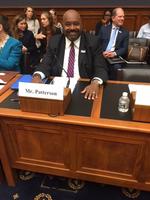
La Shelle Dozier also spoke with CLPHA Board President Jeffery K. Patterson of the Cuyahoga Metropolitan Housing Authority about what ending Restore-Rebuild would mean to public housing authorities and how CLPHA and our industry partners are opposing this detrimental action on our most recent episode of CLPHA's To The Point Podcast -- listen here.
To preserve this critical tool for affordable housing development, CLPHA has launched the Protect Restore-Rebuild Coalition on behalf of more than 3,000 PHAs, affordable housing developers, and advocates for low-income families. We are still accepting participants into the coalition. To join the Coalition and receive meeting invitations, email [email protected].